Leak Tracing & Roof Review
The interior symptom, recent weather and nearby roof features are considered together. The goal is to isolate the likely entry area before roofing materials are disturbed.
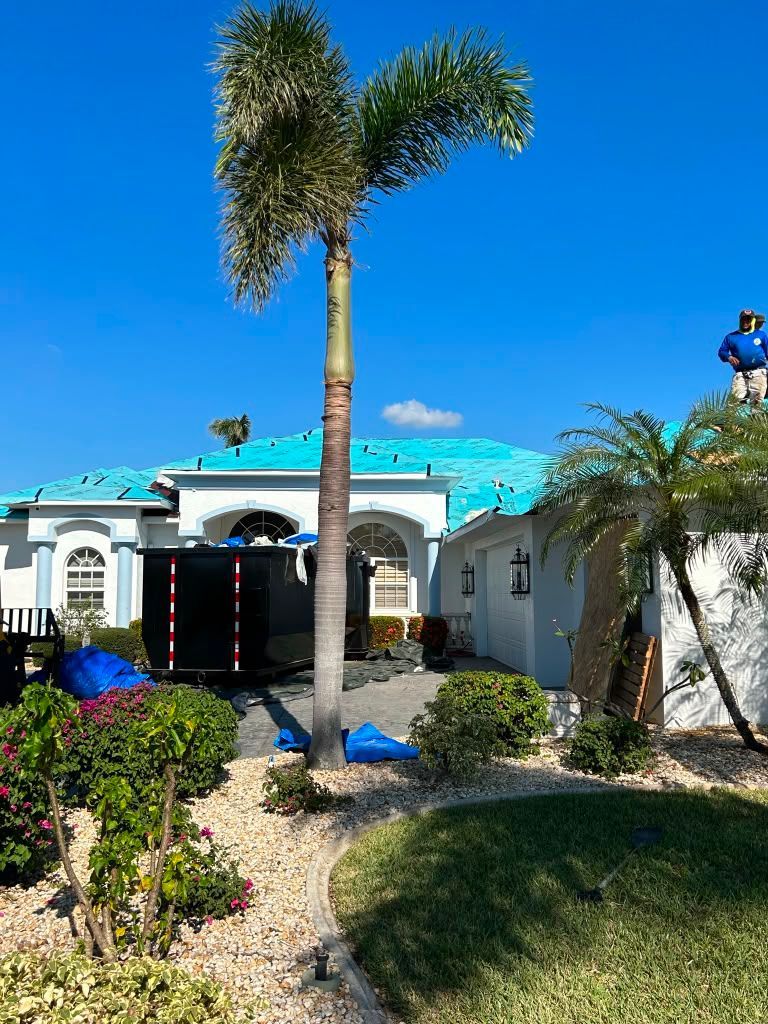
A roof leak can travel before it shows indoors. Crosstown Roofing examines the affected roof area, follows the likely water path and defines a focused repair scope for the failed materials and transitions—not just the ceiling stain.
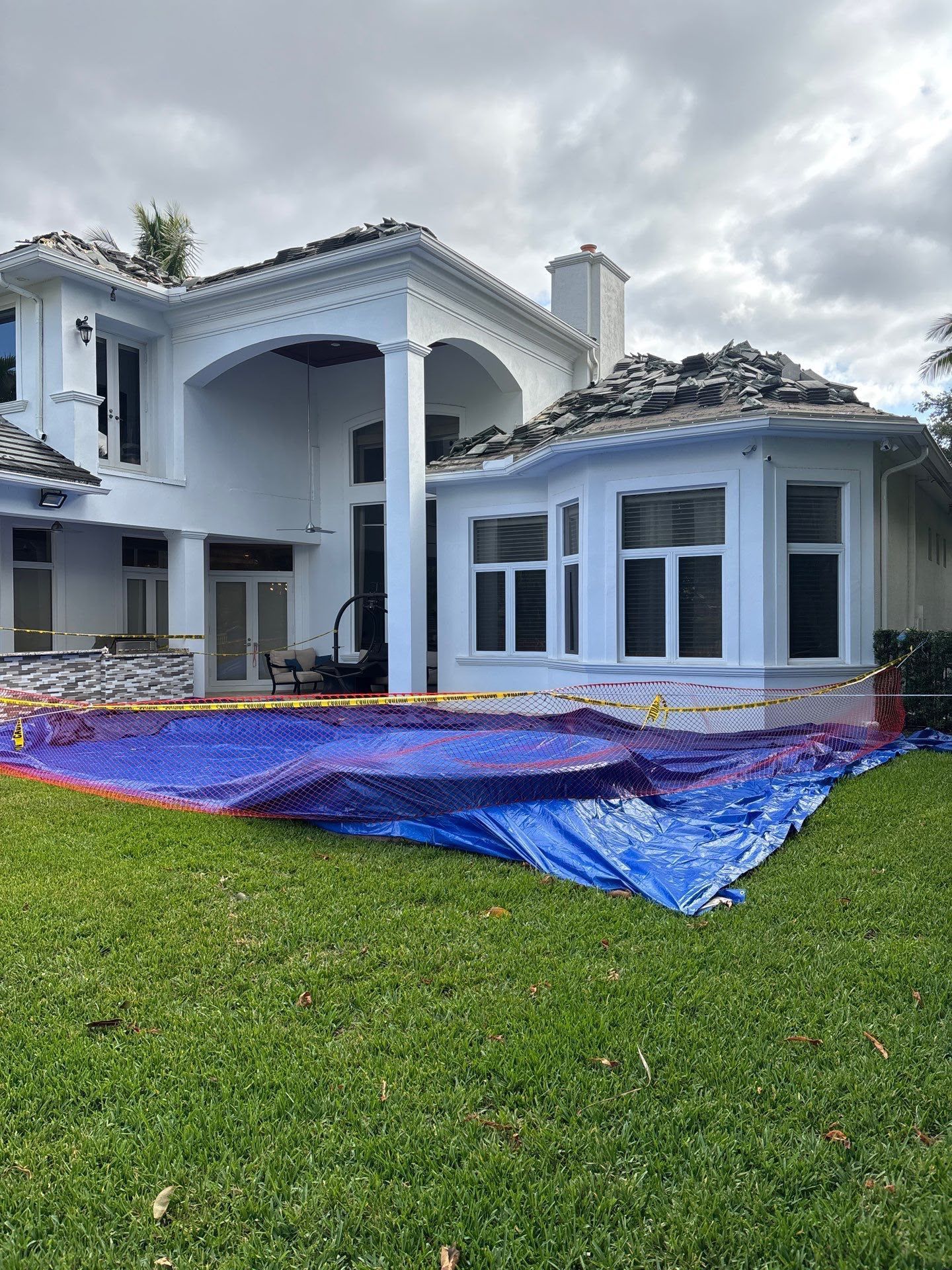
Water can move along underlayment, decking, framing or fasteners before it appears inside the house. The wet spot in a room may sit several feet from an opening at a valley, wall, vent, pipe or roof edge.
Crosstown Roofing evaluates the symptom together with the roof layout and surrounding components. The repair plan is built around the area that failed, the material needed to restore it and the condition of the roof immediately around the work.
A useful repair restores the water path so rain moves over and away from the corrected area instead of finding the same opening again.
The visible damage may involve one component or several connected layers. The scope should explain what must be opened, corrected and closed back in.
The interior symptom, recent weather and nearby roof features are considered together. The goal is to isolate the likely entry area before roofing materials are disturbed.
Lifted, cracked, slipped or missing roofing can expose the assembly below. A localized correction should integrate replacement material with the surrounding roof instead of leaving a raised surface patch.
Roof-to-wall lines, valleys, vents, pipes and other interruptions are common entry points. Repair may require removing nearby roofing so the transition can be rebuilt rather than coated over.
When moisture has reached below the surface, the repair area may need to open far enough to address compromised substrate and restore continuity beneath the finished roofing.
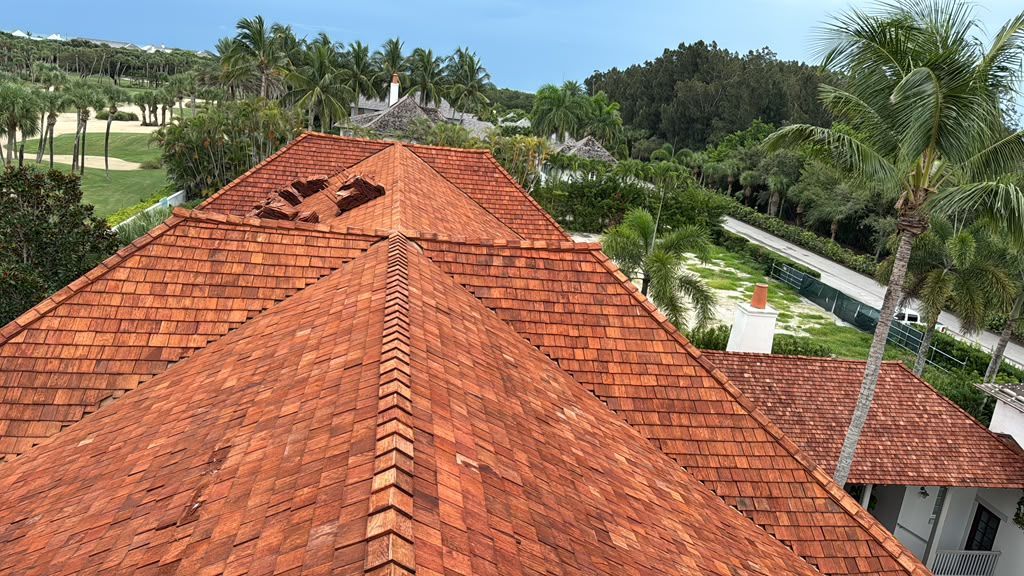
Exposed caulk can serve a specific detail, but smearing it over a moving joint, broken flashing or loose roofing rarely corrects the underlying failure. South Florida heat and ultraviolet exposure can also harden temporary surface patches.
A sound repair follows the way the roof was designed to shed water. Materials need to overlap in the right direction, flashing must connect to adjacent layers, and the repaired section has to sit cleanly within the surrounding roof.
Focused repair makes sense when the defect can be isolated and the nearby roof is still capable of supporting the correction.
One damaged transition, limited material loss or a defined penetration problem can often be addressed without disturbing the rest of a serviceable roof.
Multiple leaks, widespread deterioration or repeated failures across separate roof sections can make a small repair an incomplete answer.
Interior water marks alone do not define the scope. The connected roof areas should be evaluated before anyone promises a specific fix.
Repair work is more predictable when the symptom, source area and affected components are understood before the roof is opened.
Where the stain appears, when it leaks and what weather was occurring can reveal whether the problem is tied to wind, runoff or a specific roof feature.
The surface and nearby valleys, walls, penetrations, edges and drainage paths are reviewed instead of assuming the source sits directly above the interior mark.
The scope identifies which materials need to be lifted or removed, what underlying conditions may need attention and how the repair will tie back into the roof.
Damaged roofing, flashing, accessories or supporting layers within the repair area are addressed in the sequence required to restore water shedding.
The finished repair and adjacent details are checked, then the completed scope and any conditions outside the repair zone are reviewed with the homeowner.
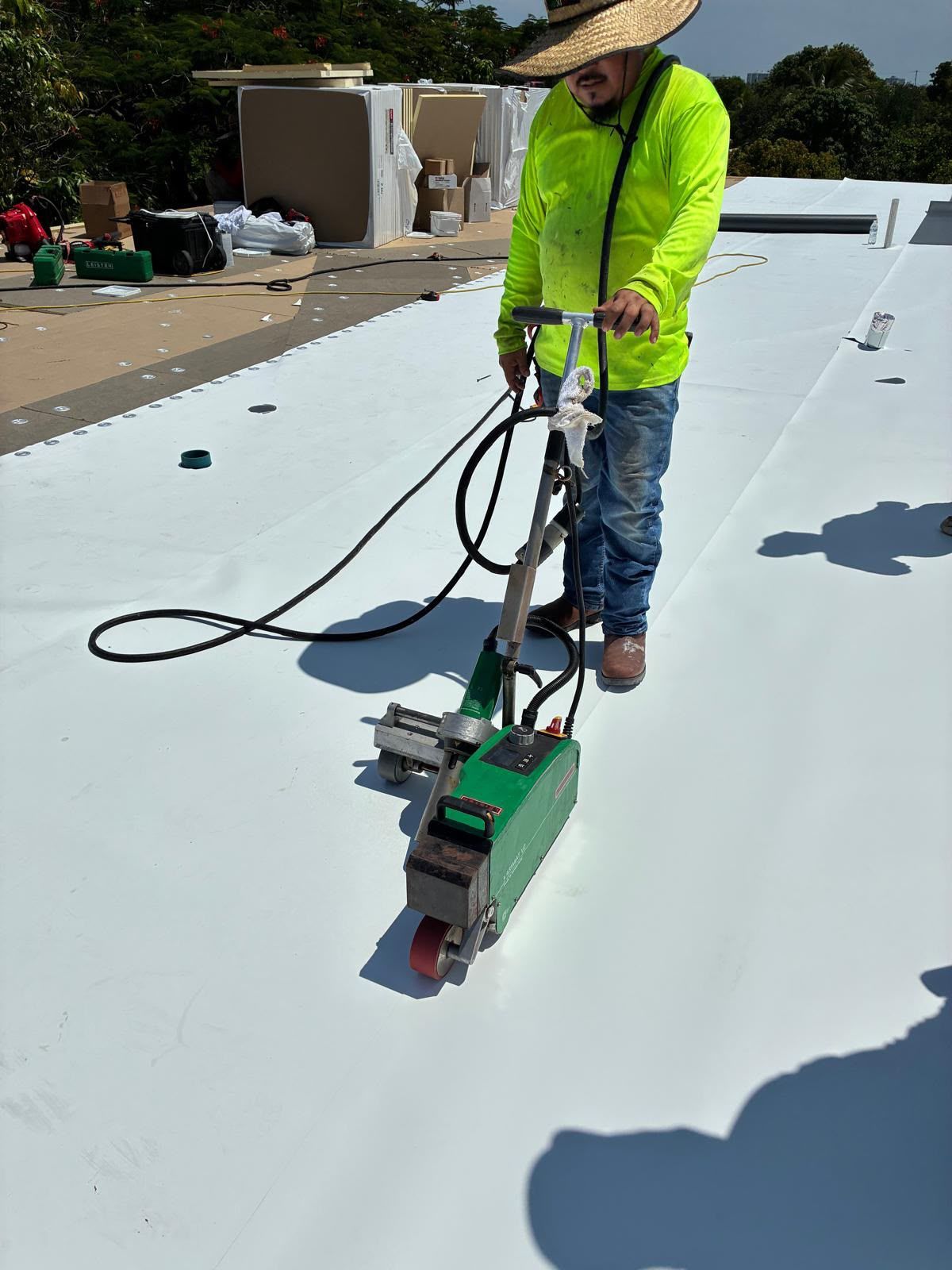
South Florida rain does not always fall straight down. Wind can push water beneath lifted edges, against wall intersections and around penetrations that may stay dry during lighter weather.
Strong sun and heat also work on exposed sealants, surface materials and transition details between storms. Crosstown Roofing provides residential roof repair in Lantana and throughout Palm Beach County with local weather patterns included in the diagnosis.
A repair recommendation should connect the interior symptom to a specific roof condition and explain the limits of the proposed work.
Yes, when the source is confined to a repairable detail or small section and the surrounding roof remains stable enough to integrate new work. The decision depends on what failed and whether adjacent materials can still perform.
After entering, water may follow the roof deck, underlayment, framing or a fastener before it drops into the living space. The indoor mark is useful evidence, but the roof geometry must be traced to identify the entry point.
Repair calls often involve valleys, roof-to-wall transitions, pipe openings, vents, edges, displaced roofing or isolated punctures. The exact scope should be based on the observed failure rather than a generic patch package.
Wind changes the direction and pressure of water. A transition that sheds ordinary vertical rainfall may admit water when rain is driven sideways beneath an edge or against a wall, flashing joint or penetration.
Sometimes sealant is one part of a repair, but adding another surface layer will not fix movement, broken flashing, poor overlap or wet material below. The failed assembly has to be evaluated before choosing the correction.
Timing varies with access, roof slope, material type, the size of the area that must be opened and what is found beneath the surface. Weather can also affect when the roof can be safely opened and closed.
Crosstown Roofing is based in Lantana and provides residential roof repair throughout Palm Beach County. Call 561-221-2980 to explain what you are seeing and discuss the next step.
Start with the leak pattern, the affected area and a repair scope built around the actual point of failure in your Lantana or Palm Beach County home.